

Businesses that rely on documents
choose Templafy














The numbers behind RFP automation
Organizations that automate their RFP process don’t just work faster. They submit more bids, win more often, and free up their best people to focus on more strategic work.
reduction in cycle time seen by those using RFP automation tools
increase in supplier response rates seen by companies using AI RFP solutions
faster RFP responses when implementing AI automation
Automate the repetitive
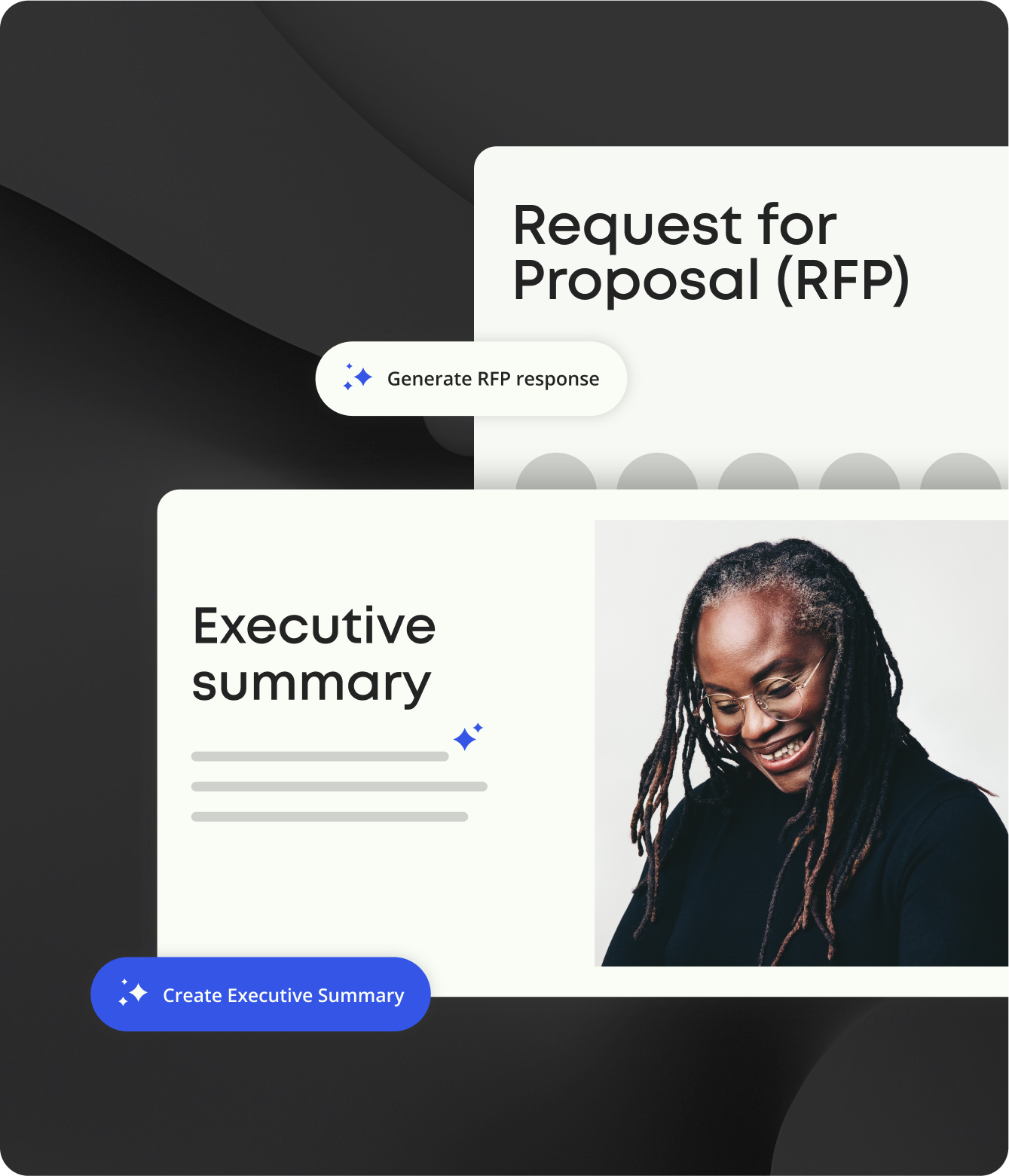
Templafy automatically suggest answers and handle tedious chores, so you can focus on strategic tasks.
Auto-populate requests
Automatically populate RFP responses with accurate, company-approved information from your CRM and other data sources, eliminating outdated data and human error.
Document assembly
Leverage advanced AI and automation to create professional documents rapidly and efficiently.
4m+ professionals trust Templafy
to improve their daily work
“The fastest that I probably could have given my client a well thought out PowerPoint presentation was at least five days. And it’s probably cut in half now that we have Templafy”
Alex Steging
VP/GM, Insights, Material+
“We’ve seen significant time savings on proposal and report creation with staff having access to a range of templates and pre-made content. Templafy has helped us respond more efficiently, delivering consistent high-quality proposals that secure new business.”
Jonathan Hoare
Commercial Marketing Director, Waterman Group
Learn more about Templafy’s document automation capabilities
What is RFP automation software?
RFP automation software uses AI and templates to speed up how you create and respond to requests for proposals. Instead of manually searching for information, rewriting the same answers, and reformatting documents every time, automation pulls approved content from your company systems and builds polished responses automatically.
How does RFP automation reduce response time?
Most teams spend weeks manually gathering information, coordinating across departments, and formatting documents. RFP automation software cuts that down in two key ways: it auto-fills information from your knowledge base, and it eliminates formatting work entirely. The result is moving from weeks to hours.
Can RFP automation software handle custom responses?
Yes. AI doesn’t lock you into generic answers. Templates serve as a starting point that AI can enhance, but your team always has control. You can adjust drafts, add custom details, and ensure every response reflects your unique strengths. This is how automation supports your people instead of replacing them.
Is RFP automation compliant and secure?
Enterprise RFP automation platforms like Templafy use rules-based AI that prevents hallucinations and false information. Your data stays in your control. Templafy integrates directly with your existing systems—Microsoft 365, Google Workspace, your CRM—so sensitive information never leaves your approved tools.
How does RFP software integrate with our existing tools?
The best RFP automation platforms work inside the tools you already use. Templafy works directly in Microsoft Word, PowerPoint, and Excel, plus Google Workspace. No need to learn new software or switch between applications. You stay in your flow.
What’s the ROI of RFP automation?
Consider this: if your team spends 20 hours per RFP response and you do 50 RFPs a year, that’s 1,000 hours lost to manual work. At typical billing rates, that easily exceeds seven figures in lost productivity. Most organizations recoup their automation investment in under a year.
How do I measure success with RFP automation?
Track these metrics: response time per RFP, number of proposals submitted annually, win rate, and hours saved per response. Most customers see considerably faster responses within the first few months, along with higher submission volume and improved win rates.
Does RFP automation work for all proposal types?
RFP automation works best with RFPs, vendor questionnaires, and other high-volume, repetitive proposals. If your team responds to the same types of requests regularly, you’ll see the biggest time savings and consistency benefits.