6 common errors hiding in your AI-generated PowerPoint

How to keep AI-generated presentations accurate, consistent, and client-ready
The productivity potential of AI is undeniable. Especially when it comes to the time-draining drudgery of creating and updating business presentations.
But hiding beneath your shiny-looking, AI-generated presentation are some pretty serious errors that are putting your brand messaging, reputation, and compliance at risk.
Today, the most dangerous presentation is the one that looks polished but contains a multitude of brand sins, from outdated figures and invented claims to generic messaging that could belong to any competitor.
For leaders trying to scale the benefits of AI, the challenge is no longer “Can we get employees to adopt AI?” It’s “Can we reap the rewards without compromising accuracy, consistency, and client trust?”
In this article, we reveal the common errors hiding in AI-generated presentations and, more importantly, how document orchestration helps organizations build company standards and compliance requirements into presentation creation across connected AI tools, without relying on everyone to write the perfect prompt.
Individual AI prompting isn’t an enterprise strategy
There’s a significant gap between AI’s potential productivity gains and the results organizations are seeing. Recent enterprise research by Templafy found that 90% of surveyed knowledge workers use AI for business documents at least weekly, yet 95% still edit the output before use. Employees spend almost four hours a week reviewing, validating, and correcting those documents, while 48% say the review required can leave little actual time saved. (Read the report)
But the problem isn’t AI assistants themselves. They’re powerful tools for research, drafting, and synthesis. The problem is that they don’t automatically have access to the current information, best practices, and company rules needed to create documents and presentations that are genuinely business-ready: factually correct, on-brand, and fit for enterprise use.
Without a structured system of governance controlling which sources AI can draw from and which requirements it must follow, generation relies too heavily on the context supplied in each prompt. That leaves room for hallucinations, outdated information, generic messaging, and missing disclosures.
A lack of governance and orchestration also puts too much onus on individual employees and teams to become prompt experts. Consultants must decide which assistant to use, which documents to upload, what instructions to provide, and whether the result meets the firm’s standards.
In other words, too many decisions are left to individual employees and AI models when the organization has already made them for good reason. Approved claims, trusted sources, methodologies, and document requirements should form the foundation of AI-generated work—not depend on someone remembering to include them in every prompt.
6 common AI presentation errors (and their enterprise impact)
That’s why the most dangerous presentation is the one that looks great. Visually impressive slides, slick layouts, and confident recommendations can make a presentation look ready to share before anyone has verified what’s underneath.
Here how six common errors in AI-generated presentations put client trust, document quality, and consistency across the firm at risk.
1. Inaccurate figures and claims undermine credibility
Perhaps the most obvious and damaging risk is inaccurate information presented as fact. Outdated figures, invented statistics, and placeholder copy can look authoritative once they’re placed in a polished slide.
Material claims need traceable sources, and figures need their dates, units, and reporting context. Clients are trusting the firm’s analysis, not just admiring its charts.
2. Generic messaging weakens differentiation
There’s a reason your firm invests in its positioning, methodologies, and customer evidence. They explain what makes its expertise valuable. Generic AI language can flatten that work into promises any competitor could make.
Without approved messaging and company knowledge, a deck can sound professional while failing to explain why the client should choose your firm.
3. Inappropriate content creates confidentiality and compliance risks
Some errors mean explaining an incorrect figure to a client. Others can expose confidential information or breach restrictions on how content is used. Sensitive data uploaded to an unapproved service or included in an external deck creates risks that go well beyond embarrassment.
Required disclosures and approved legal wording also need protection. These boundaries should be governed by the organization, not left to individual prompts.
4. Inconsistent structure makes quality harder to scale
This error may not stand out in one consultant’s presentation. Compare work across a team, department, or firm, and the differences become clear: missing sections, conflicting recommendations, outdated templates, and uneven standards.
Different prompts shouldn’t produce different definitions of client-ready. Shared content, templates, and document logic provide a consistent foundation without making every presentation identical.
5. Hidden assumptions weaken recommendations
A confident recommendation can conceal an unanswered question. When information is missing, AI may fill the gap with a plausible assumption rather than make the uncertainty visible.
That matters when slides inform strategic or financial decisions. Reviewers need to see what’s established, what’s inferred, and whether the conclusion actually follows from the evidence.
6. Uneditable output turns speed into rework
A PowerPoint presentation is rarely a one-time, static document. It moves through reviews, gets updated, and is repurposed for new audiences. It needs to remain editable as that work continues.
Static charts, flattened tables, and awkward layouts force teams to rebuild slides. Business-ready output should support revision and collaboration in PowerPoint, not create another assembly job before the deck can be used.
How document orchestration improves presentation quality
Organizations already have much of what AI needs: approved messaging, customer evidence, presentation templates, existing slides, and business data. Employees often have to find and explain that material themselves.
Document orchestration connects those inputs and company requirements to the point of document creation. It provides a centrally managed foundation for how AI generates and assembles business documents.
For presentations, the context generally falls into four areas:
- Trusted knowledge and content: approved messaging, methodologies, product information, customer references, and internal expertise.
- Business data: relevant client, pricing, financial, project, or operational information from authoritative sources.
- Presentation assets: templates, layouts, slide libraries, imagery, and brand elements.
- Business rules: requirements for access, content use, disclosures, branding, and other document controls.
The combination changes with the task. A board update and a sales proposal need different information and structures. Orchestration gives organizations a way to apply the relevant inputs without asking every employee to find, upload, and explain them from scratch.
Reuse approved content instead of recreating it
Not every part of a presentation needs AI generation. An approved company slide can be retrieved. A disclosure can be inserted with its required wording. A customer figure can come from the system that maintains it.
Generative AI can then focus on work where synthesis and adaptation add value, such as developing the storyline or tailoring content to an audience. Rules-based automation handles predictable requirements such as templates, controlled content, and document assembly.
This also helps avoid repeated generation of material the business already has. Fewer attempts to recreate standard content mean less unnecessary work and potentially less model usage.
Improve the workflow when corrections repeat
Review remains important, particularly for material claims, assumptions, recommendations, and audience suitability. But recurring corrections should lead to changes in the process.
If teams keep replacing an outdated slide, update the source. If they keep adding a missing section, change the workflow. Maintain the content and rules centrally so improvements can benefit subsequent presentations.
Measure the time and cost of getting to an approved deck, including editing, review, formatting, and model usage. That shows whether AI is reducing the complete workload as adoption grows.
How Templafy builds best practice into every PowerPoint
Templafy is an agentic document generation platform. Its Document Agents generate, compile, and assemble business documents using relevant company knowledge, enterprise data, approved content, templates, and instructions.
A centralized orchestration layer brings those elements together and applies company direction and controls. Employees provide the task-specific context, while the organization manages the foundation behind generation.
Give a simple request the right business context
Custom Document Agents can be configured for specific document workflows, teams, and requirements. A sales deck agent and a reporting agent can therefore use different context and instructions appropriate to their tasks.
Templafy’s presentation-generation technology can turn a simple request into detailed instructions using relevant company context, data, business rules, and brand logic. A request for a sales proposal can incorporate client information, approved messaging, proof points, structure, and templates before generation begins.
Employees can focus on what the presentation needs to achieve, without building complex prompts to explain the company each time.
Create, edit, and review inside PowerPoint
The Templafy Agent add-in brings presentation creation, editing, and review into PowerPoint. Teams can revise content, find approved material, improve layouts, and work with native charts, tables, and SmartArt.
For Templafy customers, the experience can connect to approved templates, company-built Document Agents, content libraries, business data, knowledge, and brand rules.
The presentation remains part of the normal editing workflow. Teams can respond to feedback and update information without rebuilding static output.
Bring the same document controls into AI assistants
Templafy MCP connects Document Agents with compatible AI platforms, including ChatGPT, Claude, and Copilot. Employees can start in a supported assistant while accessing company templates, approved content, branding, and document-generation capabilities.
MCP provides another starting point for the same orchestration platform. Company requirements remain connected to the workflow as employees work across supported AI tools.
Example: How Ramboll keep approved presentation content current
Ramboll’s experience illustrates the value of this foundation. Before Templafy, distributing updated material involved changing a template package and waiting for an IT rollout.
With Templafy, Ramboll’s branding team could centrally update templates and presentation content. Employees gained access to current marketing materials, slides, and branded assets within PowerPoint and Word.
“The biggest change overall since implementing Templafy is an increased feeling of control over the documents and presentations used throughout Ramboll.”

Roos Nederveen,
Senior Consultant Corporate Branding, Ramboll
Ready for client-ready presentations across the organization?
AI needs the right company context and controls to produce work enterprises can use confidently. Employees shouldn’t have to find the latest slides, explain every requirement, and correct the same mistakes with each presentation.
Document orchestration brings that foundation into creation. Company knowledge informs the narrative, approved content provides reusable material, and templates and business rules guide assembly. Professionals contribute client context and apply their judgment to the result.
When the meeting is an hour away, the team should be refining the recommendation and preparing for questions. Reducing repetitive document work gives them more time for that preparation, while helping the organization maintain quality across teams.
See how Document Agents work to bring company knowledge, approved content, and presentation standards into repeatable document workflows.

BLOG
Gartner® just named Templafy a Cool Vendor in 2026 Coolest Vendor Innovations in Digital Workplace Applications
October, 2026
7 min read
AI is everywhere in the enterprise. So why are leaders still finding it difficult to turn adoption into meaningful productivity gains? This is exactly the challenge Gartner examines in its recent report, Coolest Vendor Innovations in Digital Workplace Applications.
Read more
BLOG
Beyond the First Draft: Closing the AI Productivity Gap
October, 2026
6 min read
‘The Business-Ready AI Gap 2026’, Templafy’s new report based on a survey of 2,000 knowledge workers who use AI to create business documents at least once a month in the UK and US, alongside Templafy platform data, reveals the gap between a first AI-generated draft and something that’s ready to share.
Read more
BLOG
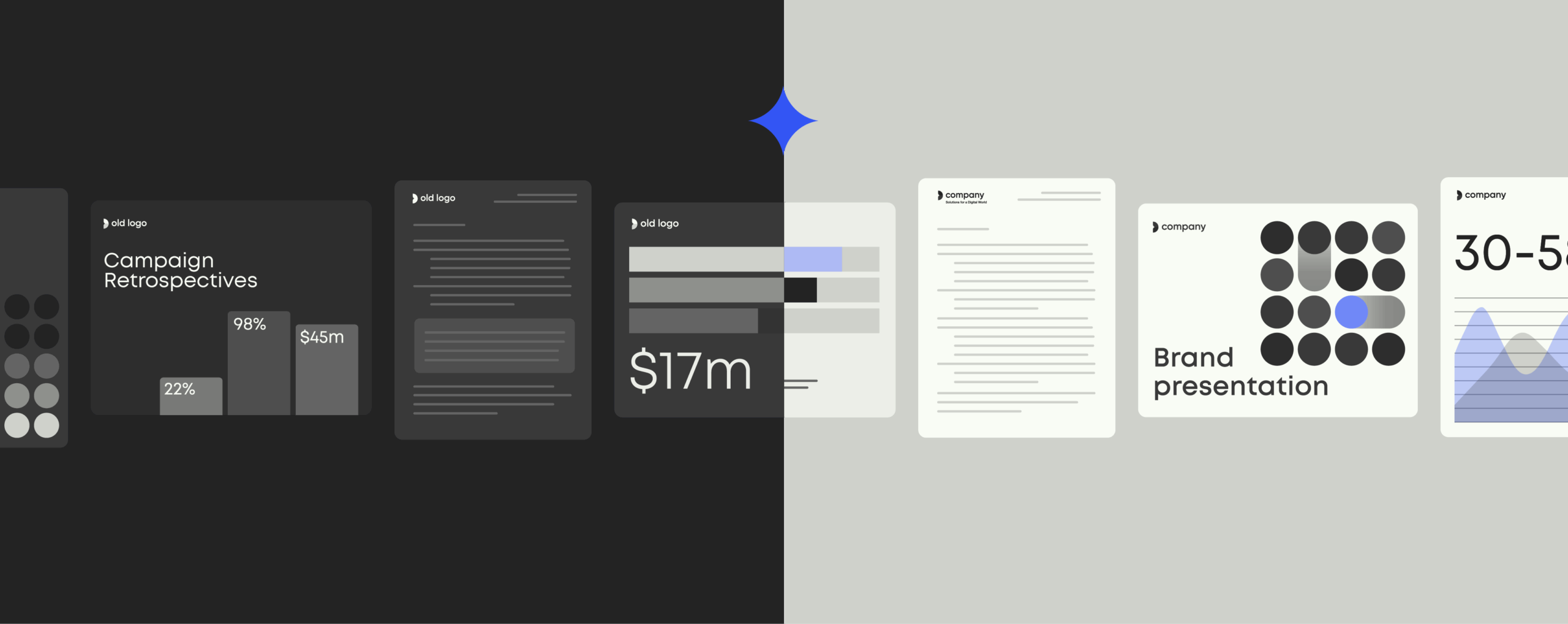
Brand governance vs. brand compliance: The crucial difference in the AI era
September, 2026
14 min read
7 ways to keep AI-generated documents accurate, current, and on-brand at scale.
Read more